Showing posts with label gumbe. Show all posts

Monday, December 27, 2010

Kimi Djabaté

When you think of  music from Guinea-Bissau, you are most likely to arrive upon the sounds of gumbe and the works of the premiere ambassador of Guinean music, a certain Manecas Costa, or, for the more familiar, the distinctive voice of Dulce Neves. So when you first listen to Kimi Djabaté's CD Karam, it might seem a bit more Mali then Guinean, a bit more Ali Farka Touré than Eneida Marta. But when you consider that the two countries are in close proximity to each other and share musical traditions, various customs, and that what is now Guinea-Bissau was once part of the Malian Empire, the music of Kimi begins to make sense. Like the Tourés and countless other musicians, Kimi also comes from a family of griots, or musical storytellers, and is one himself.

The album Karam is thus Kimi's account of Guinean life, the stories, people, and emotions that move him. It is primarily Djabaté's voice back by the balafon (a type of xylophone endemic to that region in Africa), the guitar, and the kora (stringed instrument), with some percussion and brass here and there. They combine to create a richly melodic and distinctive piece of work, such as in the upbeat and vivacious song Manla. But at times it is also understated and mellow, as the song Kod will attest to. Kimi Djabaté has been singing for many years but it's nice to see him finally get the recognition and widespread availability that a contract with the Cumbancha label affords him.

Manla (I Cannot Believe It)
Kod (Love)

Quando pensamos em música guineense, vem-nos logo à cabeça sons e imagens do estilo gumbe, ou então do maior embaixador da música guineensse, o Mr. Manecas Costa. Os mais iniciados na matéria, talvez se lembrem da Dulce Neves. É pois uma sensação um pouco aquém do esperado quando tocamos o album Karam do Kimi Djabaté na aparelhagem e nos deparamos com um estilo mais parecido com o Mali do que com a Guiné Bissau, um som um pouco mais Ali Farka Touré do que Eneida Marta. Mas se termos em conta a proximidade destes dois países tanto em termos geográficos como musicais, e se nos lembrarmos que o espaço onde existe hoje a Guiné Bissau já fez parte do império maliano, a música do Kimi já começa a ser menos 'estranha' e mais familiar. Ainda mais porque como muitos músicos malianos, incluindo o Ali Farka Touré, o Kimi Djabaté também é um griot, ou seja, um contador de histórias de forma musical. 

O disco Karam pode então ser chamado uma coleção de histórias, emoções e experiências vividas na realidade guineense pelo Kimi Djabaté. Sobressaem as vozes do Kimi e os seus vocalistas, e ouve-se a constante guitarra e kora e o ainda mais constante balafon (instrumento parecido com o xilofone). O resultado desta combinação é uma obra de arte bastante melódica e distinta, tal como se pode ver na alegre canção Manla. Mas ás vezes também pode ser um pouco mais comedida e melancólica, como ouvimos na música Kod. O Kimi Djabaté já canta há longos anos mas é bom ver-lhe finalmente ter o reconhecimento que merece e os canais de distribuição que um contrato com a label Cumbancha o oferecem.

Thursday, August 26, 2010

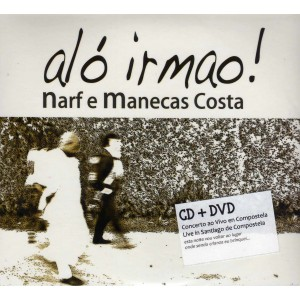
Aló Irmão, by Narf and Manecas Costa

It's because of collaborations like these that the Lounge exists. Narf and Manecas Costa are two artists from two very different places and experiences, but yet built a flourishing friendship based on their mutual love of music and the Lusophone identity. Built on that Lusophone spirit. Narf is from Galicia, the northwestern area of Spain that speaks Galego, the mother tongue of Portuguese. Uxia's galego. Manecas Costa meanwhile is perhaps the most well known and most respected musician from Guinea-Bissau. His sublime guitar skills grace many a Lusophone musician's compositions, as he has played for luso-artists such as the aforementioned Uxia, the Angolans Paulo Flores and Konde, and his fellow Guinean Eneida Marta. Narf is an artist who I am a lot more less familiar with, but who's joie de vivre and musicality I've greatly appreciated in this album.

The two songs featured on this post capture the mood of this partnership, the bridge between their different yet strangely similar cultures. Aló Irmão, the album opener and title track, is perhaps more Galician, and it features beautiful guitar work as well as shared vocals. Nha Mame is more Guinean and vintage Manecas. Hearing the album from start to finish is a lot more rewarding than sampling just these two tracks, and this is the first we've heard from Manecas, vocally speaking, in quite awhile. The entire album is recorded live.

Aló Irmão
Nha Mame

É por colaborações destas que o Lounge existe. Narf e Manecas Costa são dois artistas de lugares e experiências completamente diferentes, mas que conseguiram construir uma amizade baseada no amor que eles sentem pela música e pela sua identidade lusófona. Contruiram esta amizade com base no seu espírito Lusófono. O cantor Narf é galego, tal como a Uxia que também já foi destacada aqui. O idioma que fala é que depois deu origem à língua portuguesa. Já o Manecas Costa é talvez o artista mais cotado e respeitado da Guiné Bissau. A sua mestria com a guitarra consta nas músicas de vários artias lusófonos, entre eles a já mencionada Uxia, os angolanos Paulo Flores e Konde, e a sua conterrânea Eneida Marta. Conheço pouco o Narf, mas apreciei a sua joie de vivre e a sua musicalidade, mais que evidenciada neste álbum.

As duas músicas destacadas neste post capturam a alegria com que foi feito este trabalho. É uma ponte entre as duas culturas ali presentes, tão diferentes mas estranhamente comuns. Aló Irmão abre o disco e é mais 'galega' que Nha Mame. Nela se podem ouvir os dotes dos dois com a guitarra, e se escuta tanto o galego como o crioulo guineense. Nha Mame é toda ela em guineense, e se ouve o Manecas como nunca mais se tinha ouvido. E como se não bastasse, o álbum foi gravado ao vivo.

Aló Irmão's Official website
Aló Irmão on Myspace

Friday, July 17, 2009

Dulce Neves

Dulce NevesI first heard N’Tchanha by Dulce Neves on a Putumayo compilation (by the way, Putumayo compilations are the best compilations know to man, ever.) N’Tchanha is one of those tracks that kind of haunt you for awhile after you’ve stopped listening to it. I think it’s because of Dulce Neve’s distinctive voice – I have yet to hear a voice quite like that. It’s not in the same category as her compatriot Eneida Marta’s, nor is it as throaty and sensual as Mayra Andrade’s from Cape Verde. But it grabs your attention nonetheless. Dulce sings N’Tchanha to the sound of deftly played guitars and the distinctive sound of the Guinean water drum, so essential to the gumbe rhythm. It makes for an intoxicating combination. Unfortunately though, it is next to impossible to obtain Dulce Neves tracks, as she has next to nothing available anywhere on the internet or on iTunes. Finding a photo of her was an ordeal in and of itself. But I guess listening to N’Tchanha on repeat kind of makes up for it. At least I like to pretend that it does.

N'Tchanha

A primeira vez que ouvi N’Tchanha foi numa compilação Putumayo (e já agora, as compilações de Putumayo são as melhores compilações que alguma vez tive o prazer de ouvir). N’Tchanha é uma daquelas canções que fica contigo horas depois de a ouvir. Acho que é por causa da voz distinctiva dela – não é da mesma categoria que a voz da sua compatriota Eneida Marta, nem é sensual e ofegante como a voz da Caboverdiana Mayra Andrade. Mas mesmo assim, a voz dela agarra os teus sentidos. A Dulce Neves canta N’Tchanha com a ajuda de guitarras tocadas lindamente, e o batuque de água tão essencial para canções de estilo gumbe. É uma bela combinação. Infelizmente, é quase impossível encontrar canções dela online, ou mesmo no iTunes. So já encontrar uma foto dela foi uma missão quase impossível. Mas acho que ouvir N’Tchanha em repeat no iPod quase que compensa. Pelo menos para mim foi asism.

Dulce Neves on Youtube

Thursday, April 23, 2009

Eneida Marta

Eneida MartaAnother gem from the sands of Guinea Bissau, Eneida Marta’s soothing music is a far cry from the current plight of her homeland and makes you wonder if the people driving Guinea into abject strife know that such poignant beauty is created in their own country. Calm and confident, Eneida’s voice travels along a background of acoustic guitar and water drums, reminiscent of her compatriots Bidinte and Manecas Costa and very similar to Cesária Évora’s brand of morna. A great example is N’pirdi Coragem, sung in Guinean Creole, a simple stripped down number prominently featuring her voice and the ever-present guitar. Na Bu Mons is a bit more mellow and haunting, but with a lifting chorus where a deep male voice is the perfect accompaniment to Marta’s.

N'Pirdi Coragem
Na Bu Mons

Mais uma jóia musical das terras de Guiné Bissau, a música calmante de Eneida Marta é um antídoto as notícias de sofrimento e pobreza que nos chegam sempre daquelas paragens. Até faz-nos pensar, será que os que arrastam a Guiné para o lado errado da história têm conhecimento da beleza aural que é criada naquele país? Relaxade e comovente, a voz de Eneida Marta soa lindamente sobre as guitarras e batuques d’água, como uma espécie de versão feminina de Bidinte e Manecas Costa. Até faz lembrar os mornas de Cesária Évora. Um belo exemplo é N’pirdi Coragem, cantado em creole, um arranjo musical simples em que a sua voz e a guitarra acústica são as principais personagems. Em Na Bu Mons, uma canção linda, o coro é cantado por Eneida e uma voz masculina grossa, fazendo uma parceria perfeita.

Eneida Marta on Griot Sound
Eneida Marta's Myspace

Saturday, April 4, 2009

Manecas Costa

Manecas CostaWhile many people have never heard of Guinea-Bissau and cannot find it in a map, its music deserves far wider recognition. Click on Ermons di Terra and hear Manecas Costa lovingly play the acoustic guitar to a beautiful gumbe* melody replete with native Guinean sounds such as the water drum. Listen to how his soulful voice reaches out, how it yearns, how it complements the melody perfectly. His music is universal and you don’t need to understand Creole to appreciate its unique qualities. Manecas Costa is one of Guinea-Bissau’s most accomplished musicians, a master of the acoustic guitar. He has played with several notable musicians including the Angolan Waldemar Bastos, the Spaniard Jose Romero, and Sara Tavares. His lyrics usually have a social theme, dealing with the many difficulties of his country. Manecas composes, produces, and writes all his own material, and his skills are displayed to full effect on the catchy tune Fundo di Matu, a hit when it came out in Portugal, his adopted home.

Ermons di Terra
Fundo di Matu

Enquanto que ha muita gente pelo mundo afora que nunca ouviu falar de Guiné Bissau nem o consegue encontrar num mapa, a sua música merece uma consideração muito maior. Ouça a bela canção Ermons di Terra, em estilo gumbe...escute o arranjo instrumental, puramente guineense, como o batuque d’agua...escute a forma como Manecas Costa toca a guitarra amorosamente, como a voz dele soa lindamente sobre a melodia, repleta de alma e sentimento, cheia de soul. Manecas Costa é um dos embaixadores principais de música guineense, mostrando ao mundo que existe um lado belo de Guiné Bissau, londe dos assasinatos políticos que assolam a capital. Um mestre da guitarra acústica, Manecas Costa ja tocou com o conhecido Waldemar Bastos, o espanhol José Romero, e Sara Tavares. As suas letras têm um conteúdo fortemente social, descrevendo e comentando sobre o dia a dia guineenese. Ele compõe, produz, e escreve o seu próprio material, incluindo a canção Fundo di Matu, uma das suas mais conhecidas canções. Guiné Bissau pode ser um dos países mais probres do mundo, mas Manecas Costa, Bidinte, e outros fazem da sua música uma das mais ricas em África.

*Gumbe is a rhythm of song native to Guinea-Bissau

- Photo by Daniel Arantes

Manecas Costa on Amazon

Monday, March 30, 2009

Bidinte

Bidinte
You have most likely come across the grim story of Guinea-Bissau's recent coup d'etat. You have probably seen pictures of the blood splattered kitchen where Ex-President Nino Vieira was shot and attacked with machetes, days after he had ordered the death of his army chief. The next day, there wasn't even any kind of popular unrest, and incredulous Westerners reported that the locals didn't care much about what had happened and were not that surprised. That is the real tragedy of Guinea-Bissau, one of the poorest countries in the world and lagging behind every kind of conceivable development index. A bloody, violent double murder that ended with the death of the two most powerful people in the country failed to shock the tired population, the population of a country that displays to the world the worst of what Africa, and humans, are capable of doing.

This is the kind of atmosphere and reality that has spawned Bidinte, a gifted song writer, composer, percussionist, vocalist, and guitar player. He sings in Guinean Creole, a fusion of Portuguese and native African dialects. Bidinte is proof that even in the most hellish of places, art survives. Music exists. Poetry is created. Bidinte's songs are mournful and haunting, with clear Malian influences that when paired with his vocals and guitar, produce a very fresh sound. Considjo di Garandis is a great example. However, the juxtaposition of his words and the images in his video for the song Ke Cu Menino Na Tchora, available on iTunes, left me speechless...

Considjo de Garandis

Normalmente, só ouvimos falar de Guiné Bissau quando alguma tragédia acontece. Recentemente, foi a morte violenta, à catanada, do seu Presidente, feita como resposta à morte do seu chefe das forças armadas, que ele mandou matar. Nos dias seguintes, não houve nenhuma grave reação da população. Jornalistas europeus e americanos perguntavam, incrédulos, como tanta apatia era possível depois de um evento como este. Esta é a real tragédia de Guiné Bissau: ja aconteceu tanta besteira que a sociedade perdeu a sua capacidade de admiração. A morte violenta das duas pessoas mais importantes no vida política do país não admirou la muita gente. E assim caminha Guiné Bissau, rumo ao fracasso total.

É este tipo de ambiente que produz um Bidinte. Bidinte este que, na face de tanto descalabro, optou pela música, pela poesia, pela guitarra, pelo batuque, em fim, optou pela responsabilidade de trazer um pouco de felicidade à sua gente. Bidinte é prova de que mesmo quando o ser humano opta por transformar um paraíso, como são as terras de Guiné Bissau, em inferno, a arte sobrevive. A música não para. A poesia não morre. As canções de Bidinte são tristes e emocionantes, com claras influenças de música maliana que, quando combinado com as habilitações vocais do mesmo, produzem um som único. Considjo di Garandis é um belo exemplo. Mas as imagens e a letra da música Ke Cu Menino na Tchora deixaram-me sem palavras...


Bidinte on NatGeo
Bidinte CD Kumura
Related Posts Plugin for WordPress, Blogger...