Showing posts with label Bossa Nova. Show all posts

Monday, May 20, 2013

Movimento, by Aline Frazão


It's called Movimento and it's Aline Frazão's second album, a favorite of this blog. Aline is currently my favorite Angolan chanteuse, a voice that I have heard blossom into what it is today. I've had Movimento in rotation for about 20 days now; the singer gave me an advance copy. Perks of the trade, I guess. I felt privileged to have been one of the first people to hear this beauty from start to finish - 52 minutes of music of a quality as such that I couldn't wait to be able to share it with someone else. There's not much point to enjoying music this good without being able to share it, and today, 20th May,  the album is released in Portugal and I can finally write about it and share it with you.

Inevitably comparisons between Movimento and Aline's debut album Clave Bantu will arise. With 12 original tracks, her sophomore effort is one song longer than Clave Bantu and when it reaches the end it leaves me longing for more, as any great album will. As always there are some songs I like more than others, but song for song, generally Movimento's tracks are stronger, more polished, have better lyrics, and more memorable melodies. And it's more introspective. You hear a singer who is clearly on the ascendence, who is enjoying renewed self-confidence, greater maturity, and sure of her gift and her talent. This is clearly a singer enjoying her music.

Movimento begins with As Paredes do Mayombe, one of the more forgettable tracks; it begins to find its footing with Cacimbo, a beautiful melody with great lyrics. Desassossego, written by Angolan poet and author Carlos Ferreira 'Cassé' is the third track. And then comes the album's strongest period: tracks 4 through 9 are all gems.

For me, Tanto is this album's winner. It has the best lyrics, an intricate delivery and fantastic execution; I consider it Aline's best work to date. The song's video is almost as brilliant as the lyrics. It was here that I stopped the album and clicked back for the first time: I couldn't get enough, not yet anyways. After the song's climax we head to Crónica de um (des)encontro, another beautiful track that deserves another listen. It could very well be the album's third best track.

Nossa Festa and Poema em sol poente get better with time; at first listen I didn't rate them as highly as I do now, especially since I fell in love with Nossa Festa's lyrics. It's also a highlight on the album. We've arrived then at Lugar Vazio. After Tanto, it's my favorite song on Movimento. I prefer Tanto's lyrics but Lugar Vazio has a better melody. What a thing of beauty. I also enjoy the lyrics on A cidade que eu habito; among the last three songs on the album, Ronda, Kalemba and A última bossa, the highlight is Kalemba, brilliant in its simplicity.

I think I love Movimento because at its core it is an album about home - it reminds em of Luanda, my family, my friends, my past loves, and it makes me feel good. For me, Movimento was an aural trip home, to today's Luanda's. And it's a trip in which my companion is the warm, familiar, unmistakable sound of Aline's voice.

Thoroughly recommended.

Tanto
Lugar Vazio

Chama-se Movimento e é o segundo álbum da Aline Frazão, a cantora angolana mais apreciadas neste espaço. Há cerca de 20 dias que o tenho em rotação, tendo o recebido directamente da cantora. Ossos do ofício. Senti-me privilegiado por ser das primeiras pessoas a ouvir esta obra de arte, estes 52 minutos de música de uma qualidade tal que doía-me não poder a partilhar com alguém. O que vale poder ouvir música tão bela sem ter alguém com quem a partilhar? Hoje, dia 20 de Maio, data de lançamento deste  lindo disco, posso finalmente partilhar convosco a beleza que é o Movimento da Aline.

Foi um imenso prazer ouvir este disco. Surgem, inevitavelmente, comparações com o álbum de estreia da Aline, Clave Bantu. Com 12 faixas, todas originais, Movimento tem mais uma música que Clave Bantu e quando chega ao fim deixa-me com água na boca; quero mais. Como sempre, gosto mais de algumas músicas do que outras. Mas tema por tema, geralmente as músicas do Movimento têm melhor lírica, uma melodia mais memorável.  E é mais introspectivo. Ouve-se uma cantora em ascensão, com cada vez mais auto-confiança, mais maturidade, mais segura de si mesmo e do seu talento. Nota-se que a Aline arriscou mais, soltou-se mais um pouco, voou mais alto.

Movimento inicia com As Paredes do Mayombe, que não é das minhas preferidas nem das músicas mais memoráveis. O álbum melhora com Cacimbo, uma linda melodia e letra; a seguir vem Desassossego, uma letra do conhecido poeta e escritor angolano Carlos Ferreira 'Cassé'. Porém, o trecho mais forte do disco são as faixas 4 a 9; é neste trecho onde são encontradas as melhores músicas deste querido disco.

Para mim, Tanto (a quarta música) tem a melhor letra do disco e acredito ser a melhor música da Aline de sempre. O brilhante vídeo da música, publicado aqui, é quase tão bom como o tema. Foi aqui que parei de ouvir o álbum; fixei-me só no Tanto e só depois de o ouvir um par de vezes consigo continuar. É quase sempre assim. Depois do climax do Tanto vamos ao encontro de Crónica de um (des)encontro, outro bonito tema que merece especial atenção. Também é das músicas mas bem conseguidas do Movimento.

Nossa Festa e Poema em sol poente crescem com o tempo; na primeira audição não me chamaram muita atenção, mas com o passar do tempo apaixonei-me com a letra da Nossa Festa. Hoje é dos meus temas preferidos neste disco. Chegamos então ao Lugar Vazio. Depois de Tanto, esta é a minha música preferida em Movimento. Gosto mais da letra do Tanto, mas em termos de melodia Lugar Vazio ganha. Que música mais bonita. Também aprecio muito a letra d'A cidade que eu habito; Entre as três ultimas, Ronda, Kalemba e A última bossa, o destaque vai para Kalemba, brilhante na sua simplicidade.

No fundo, Movimento faz-me lembrar de Luanda, de casa. Faz-me lembrar da minha família, dos meus amigos, dos amores do passado, e isto faz-me sentir bem. Para mim o Movimento é uma viagem por sonora pela nossa Luanda de hoje, pela voz marcante, familiar, calorosa que é a voz da Aline.

Recomendo. Mesmo.

Monday, December 19, 2011

Clave Bantu, by Aline Frazão

There are not many Angolan singers quite like Aline Frazão. Turn on the radio in Luanda or Lubango or Benguela on any given day and you’re hard pressed to hear anything quite like her. She’s one of the country’s most unique talents and her debut solo album, Clave Bantu, further cements her position as one of Angola’s most exciting musicians. Some weeks ago she asked me what I thought about the album so far. This is what I emailed her:

“…I’ve heard Clave Bantu some six times from start to finish, including on my bus trip from New York to Washington where I listened to it at high volume and felt as if I was attending an intimate live music performance. I’ve let it marinate in my ear drums for some time now. One of the first things that came to mind was the thought: 'so now we have our own Sara Tavares.' It’s beautiful, very much so, and it’s also very much yours. It has your stamp on it. I think you’ve found your voice. Now I can listen to a song and say, ah, this is Aline. Compared with other CDs you’ve done (A Minha Embala), this one is in a different league. The production is well done and the sound is more professional. Some of your earlier songs are dressed differently on this album…Primeiro Mundo is very nice, emotional. It’s currently my favorite. I preferred the original Babel in some parts. Oriente is another one I love, as is Ceu da tua Boca…


Anyways, I’m listening to the album again now…”

When I interviewed Aline back in the earlier days of this blog she had mentioned that she wasn’t planning on ever releasing an album. I’m extremely pleased she has changed her mind, and I’m sure I share that sentiment with her many fans, in Angola, Brazil, Portugal, Spain, Argentina, and elsewhere. I’m also very proud of the way she did it, keeping full control over all aspects of the album production and doing it all on her own terms, independently. The end product is an album that is every inch Aline, in substance and in feeling.

Clave Bantu has 11 tracks; below you’ll find some of the album’s standout tracks, namely Primeiro Mundo, Oriente and Amanheceu. Both Jose Eduardo Agualusa and Ondjaki, two heavyweights of Angolan literature, contributed to two songs; Amanheceu, featured below, was written by Ondjaki (Agualusa wrote ‘O Ceu da Tua Boca’). The rest of the album was written by Aline, who proves not only to be an excellent songstress but also a wordsmith in the making. Jose Manuel Díaz, from Cuba, and Carlos Freire, from Galicia, contributed on bass and percussion, respectively. Listen to the tracks below to get a sampling of the album’s unique blend of acoustic afro-jazz with bossa influences.

Primeiro Mundo
Oriente
Amanheceu

Creio não existir, no panorama musical angolano, uma cantora tal como a Aline Frazão. Quando ligamos a rádio em Luanda, ou Lubango, ou Benguela, é difícil escutarmos música como esta, feita mesmo por uma filha cá de casa. É uma das vozes mais únicas da banda e o seu primeiro álbum à solo, Clave Bantu, só veio cimentar a sua posição como um dos talentos angolanos mais emocionates destes últimos tempos. Algumas semans atrás ela perguntou-me como estava a gostar do álbum. Foi essa a minha resposta por email, escrita ao som do disco em questão:

“Epa, já ouvi a Clave Bantu umas seis vezes do princípio ao fim, inclusive em alto e bom som na minha viagem de autocarro de New York para Washington, como se fosse um concerto intimista. Já o deixei temperar nos meus tímpanos um bom bocado. Das primeiras coisas que me veio a cabeça foi o pensamento: 'afinal já temos a nossa Sara Tavares.' Está lindo, lindo mesmo, e com um som e um 'feeling' muito teu, uma forma de cantar muito tua. Já tens a tua marca, creio. Já posso ouvir uma música e dizer, ah esta é a Aline. Comparando com as outras obras que lançaste (A minha embala) este está noutro campeonato. Os arranjos estão bem feitos e o som é profissional. Algumas das músicas que já conheço têm aqui uma outra roupagem...Primeiro Mundo está muito nice, emotivo. Neste momento é a minha preferida. Com a Babel talvez preferia a versão mais antiga em algumas partes. Oriente é outra das que amei, bem como Ceu da tua boca.


Enfim, estou a tocar o álbum outra vez agora...”

Quando entrevistei a Aline nos primeiros tempos deste blogue, ela tinha mencionado que não tencionava lançar um álbum próprio. Tal como eu, os seus fãs em Angola, Brasil, Portugal, Espanha, Argentina e por aí me diante estão extremamente felizes que ela mudou de ideias. Os seus ouvidos agradecem, as suas almas também. Sinto-me também orgulhoso dela porque não só lançou álbum, mas fê-lo a sua maneira: manteve o controlo total de todos os aspectos relacionados com o álbum e lançou-o de forma independente. O produto final é um álbum que é todo ele Aline, em substância e em feeling.

O disco tem 11 faixas; acima pode encontrar alguns dos temas mais brilhantes do disco, incluindo Primeiro Mundo, Oriente e Amanheceu. Tanto o José Eduardo Agualusa e o Ondjaki, dois nomes sonantes da literatura angolana, escreveram uma letra cada para o álbum; ‘Amanheceu’ é da autoria do Ondjaki e Agualusa escreveu ‘O Ceu da tua Boca’. O resto do álbum foi escrito pela Aline, que para além de ser uma excelente cantora também já dá mostras de ser boa escritora. A banda é composta pelo Jose Manuel Díaz, cubano, e Carlos Freire, galego, na percurssão. Oiça as músicas acima para ter uma ideia do aroma afro-jazz/bossa que traz o disco.

Clave Bantu on iTunes
alinefrazao.com
Como comprar Clave Bantu onde quer que esteje // How to buy Clave Bantu wherever your are

Thursday, September 1, 2011

Chove Chuva, by Sergio Mendes and Brasil '66

Here in the Northern Hemisphere, September invariably brings with it a feeling that it's the end of a glorious summer. For most of my  life it meant 'back to school lists', waking up early, and a return to the classroom; now it just means...work as normal. However, it's next to impossible to listen to Sérgio Mendes and Brasil '66 and not think about summer...this little tune came on in my iPod today and I wanted to share it with you. Notwithstanding it lyrics but instead glorifying its vibe, summer lives on!

Chove Chuva

Aqui no hemisfério norte, o primeiro dia de setembro trás sempre consigo um sentimento de que é o fim de um verão glorioso. Por grande parte da minha vida o começo de setembro significava aulas, escola, acordar cedo, e tudo mais. Agora significa...ir ao trabalho, como todos outros dias. Mesmo assim, é impossível não sentirmos o verão quando ouvimos Sérgio Mendes and Brasil '66...esta pequena canção fez uma aparição inesperada no meu iPod hoje de manhã e queria partilha-la com vocês. Esquecendo convenientemente a letra da música mas sim invocando a sua vibe de verão, viva o verão!

Monday, May 16, 2011

10 Great Reasons to Listen to Music in Portuguese

Often overlooked and constantly under-appreciated, music in Portuguese is undergoing a remarkable renaissance that is redefining the many genres that it spans. Produced in countries in several different continents and showcasing an astonishing diversity of sound, lyricism, talent, rhythm, and innovation, music in Portuguese is rapidly attracting new listeners and fans across the world, many of which can't even understand the lyrics. Whether its created in Angola, Portugal, Brazil, Mozambique, Cape Verde or, increasingly, in collaborations between artists residing in these different countries, music in Portuguese is a welcome respite from the generic, mass-produced vapid fare clogging our airwaves.

Below are 10 great reasons to listen to music in Portuguese. For the long-time readers of this site, many of the songs, artists and genres are familiar, but for first time visitors, this might open up a window to a new, vibrant musical culture.

1. Bossa Nova
By Lwakuti Loyo (7 Xagas)
It's one of my favorite genres of music and perhaps one of the first genres to put music in Portuguese on the proverbial map. One of Brazil's most beautiful exports, bossa nova was created in the late 1950s and was made immortal by the collective geniuses of António Carlos Jobim, Vinicius de Moraes, and Elis Regina, among several others. I wrote about my favorite bossas on this post here, and below is one of the genre's most iconic songs, Só Tinha de Ser Com Você, sung by Elis Regina and Tom Jobim.

Só Tinha de Ser Com Você

2. Madredeus
Teresa Salgueiro, by Volume 12
Madredeus is and will probably always be my favorite musical group from Portugal. I started listening to them at a young age because of my father always having several CDs of theirs in the car; it wasn't until much later in life that I began to grasp the beauty of their music. Teresa Salgueiro's exquisite voice is a pleasure to listen to, but credit must also be given to the entire band's unique musicality. Below is one my favorite songs of theirs, a song that displays all that is amazing about Madredeus. It's called Guitarra.

Guitarra

3. Buraka Som Sistema
Kalaf, Buraka Som Sistema, by NRK P3
Kuduro's explosion around the world has been nothing short of remarkable, and Buraka are a big reason why. Buraka band member Andro Carvalho 'Conductor' gave an interview to this blog in which he tells us just how exhilarating Buraka's meteoric rise has been and just how high energy their concerts have been. As for kuduro itself, I guess when the genre starts making it into big budget Hollywood films (ie Fast 5, which features Lucenzo's Danza Kuduro, although the song's "kuduroness" is debatable), we can safely say it's gone beyond viral and into the realm of the mainstream. Hangover (BaBaBa) is Buraka's latest concoction.

Hangover (BaBaBa)

4. Música Popular Angolana (MPA)
Blue Note, by Lwakuti Loyo (7Xagas)
The world has finally started to take notice of the quality, genre-transcending recordings that were made in Angola before it's independence. The critical acclaim surrounding Analog Africa's Angola Soundtrack: The Unique Sound of Luanda (1968-1976), as well as numerous compilations, remixes, and national radio appearances  is further proof that Angola's popular music of decades past is experiencing a renaissance amidst renewed interest from music lovers everywhere. Check out the short but vibrant jam Tira Sapato by Dimba Diangola to get a taste of MPA.

Tira Sapato

5. 340ml
Paulo Chibanga of 340ml, by braulio.mora
This might be cheating - 340ml don't sing in Portuguese. However all four immensely band members, who now reside in Johannesburg, hail from Maputo, Mozambique and their sound is a mixture of Mozambique's marrabenta, Brazil's bossa, afro-jazz, and a whole lot of dub. I had the pleasure of meeting them and seeing them perform live in the Luanda International Jazz Festival do the delirium of their Angolan fans, myself included. They're one of my favorite bands and are widely in demand not only in southern Africa but now increasingly in Europe as well. Make It Happen is one of my favorite songs from them.

Make it Happen

6. MPB
Tulipa Ruiz, by CGauer
While in the US the music that plays on the radio is deplorable at best and largely uninspiring, in Brazil it's the opposite. Popular Brazilian music (MPB) is as good as ever, and several young musicians are making sure it stays that way. I'm talking in particular of artists such as Maria Gadú, Tulipa Ruiz, Luísa Maita and Marcela Bellas, four women who have been reinterpreting the genre with their simple yet sublime individuality. Aqui by the very talented Tulipa Ruiz is a prime example.

Aqui

7. Contemporary Fado
António Zambujo, by Deezer.com
For you Portuguese speakers out there, this article has it spot on when it comes to describing the new generation of fado singers emerging from Portugal and the contemporary fado they sing. I'm thinking in particular of Deolinda, Mariza and, of course, António Zambujo, my favorite contemporary Portuguese singer right now. His wordplay is exquisite, as is his delivery, and his voice has a hard to find quality to it. The man is a poet with a gift for singing. Fado da Vida Bela is my current 'obsession'.

Fado da Vida Bela

8. Milton Gulli: Cacique '97 and Dub Inna Week
Milton Gulli, by Manuel Lino
Mr. Gulli is the creative power between two of the most exciting projects in alternative Portuguese music: Cacique '97 and their unique brand of Portuguese afro-beat, and Dub Inna Week with its superb dub rhythms. Both projects have proven to be hugely successful and have attracted a following around Europe and Africa, and feature collaborations with musicians from several Lusophone countries. Below is their album opener, Jorge da Capadócia.

Jorge da Capadócia

9. Cape Verde after Cesária

Mayra Andrade. Sara Tavares. Tcheka. Nancy Vieira. Lura. Maria de Barros. Cesária Évora's legacy on this Lusophone archipelago is eternal, but the beauty of it all is that she inspired all of the supremely gifted musicians named above. It's amazing that such a tiny country could have produced such a caliber of musicians, all of which have legions of fans around the world, playing to packed houses from Lisbon to Paris to Boston, where I had the pleasure of seeing Sara Tavares live. Morna is a beautiful, melancholic melody, and if you haven't heard it before, let Nancy Vieira show you what I mean:

É Morna

10. Lusophone Hip-Hop
Lusophone countries have been blessed with proficient wordsmiths. In our countries, rap is still the preferred music of social intervention and it's usually politically charged; the worship of material wealth and fat asses hasn't yet asphyxiated the creativity  of our consummate hip-hop artists. Mozambique has Azagaia, Brazil boasts Gabriel o Pensador, Angola has Ikonoklasta, Portugal has Valete, and this is just scratching the surface. Their lyrics are explosive but completely realistic, dealing with the many hardships and injustices that beset their fellow countrymen, and two artists on that list (Azagaia and Ikono) have been harassed by the law or even put in jail in their respective countries for "talking too much". Even if you don't understand the lyrics, take a listen to Subúrbios just so you can experience Valete's delivery.

Subúrbios

-Title photo by Lwakuti Loyo (7 Xagas)

Post inspired by Mr. Robertson F. Barros' list on Amazon.com

Friday, April 22, 2011

Caipirinha Lounge Cinema: Assinatura de Sal, by Aline Frazão

Guitarra. Voz. Mar. Beleza. Se todas as sextas-feiras começassem assim...Escutem uma das mais belas canções da cantora angolana Aline Frazão. E já que uma imagem vale mais que mil palavras, eis o vídeo:

Guitar. Voice. Sea. Beauty. If only all Fridays began like this...Check out one of Angolan singer-songwriter Aline Frazão's most beautiful songs. And since a (moving) picture is worth a thousand words, here is the video.


Assinatura de Sal

Friday, March 18, 2011

Magnetism Vol. 1, by Ive Mendes

I consider her this blog's sweetheart, since she was one of the first artists I talked about back in the faraway year of 2009. She was the Lounge's 8th post, when the blog was taking its first timid but confident steps. Now, two years and 451 posts later, I come back to let your ears peek into another window of Ive Mendes' soothing music, due to the release of her new double-album, Magnetism. Thus, the Brazilian Sade takes over my brain with her alluring brand of intimate bossa nova and smooth jazz, where her voice shines through no matter what language she sings in, for the next 45 minutes, about the time it takes to play Magnetism's first CD without skipping a single song, because you don't really have to. Among this album's highlights are its first three songs: Yellow, the more than well known Eu Sei Que Vou Te Amar, and I Don't Want to Talk About It. Yellow is my favorite.

Yellow
Eu Sei Que Vou Te Amar
I Don't Want to Talk About It

Considero-a como sendo a coqueluche deste espaço, já que foi uma das primeiras artistas sobre a qual escrevi, no longíquo ano de 2009. Foi o meu oitavo post no Lounge, quando este blog estava a dar os seus primeiros passos, tímidos mas certeiros. Hoje, dois anos mais tarde e 451 posts depois, volto para vos dar mais um ar da graça sensual da Ive Mendes, a propósito do lançamento do seu segundo álbum, Magnetism, que por sinal é um álbum duplo. A Sade brasileira volta assim a tomar conta do meu cérebro sem pedir licença, com a sua bossa nova e smooth jazz feitos mais íntimos pela sua voz ofegante, dutrante um pouco mais de 45 minutos, tempo que leva para tocar o disco 1 do Magnetism do princípio ao fim, sem uma única vez carregar no botão para avançar qualquer música que seja. Entre as músicas mais belas deste disco, cantado em inglês e português, destaque para as primeiras três: Yellow, a mais que conhecida Eu Sei Que Vou Te Amar, que nunca sai da moda, e I Don't Want To Talk About It. Yellow é a minha preferida.

Wednesday, January 12, 2011

Putumayo Releases Bossa Nova Around the World

A minha label preferida acaba de lançar um álbum de carácter lusófono, o Bossa Nova Around the World. É uma colecção de 12 faixas inspiradas pelo bossa nova, de lugares incomuns como França, Canada, Alemanhã, Sérvia, e Coreia do Sul. A segunda faixa do disco é o nosso conhecido duet da Nancy Vieira com o Tito Paris, Esperança de Mar Azul. Vai ao site do Putumayo, escute as músicas e vê se compras o álbum...se não, sempre podes voltar aqui e ouvir as 11 melhores bossas do passado e do presente.

My favorite label has just released their latest Lusophone themed album, Bossa Nova Around the World. It's a collection of 12 bossa-influenced tracks from places like France, Canada, Germany, South Korea, and Serbia, and even features Nancy Vieira's stellar duet with Tito Paris, Esperança de Mar Azul. Go over to Putumayo's site and sample the songs...maybe you'll even buy the album. Then come back here and check out the top 11 Bossa Nova Songs of Past and Present.

Wednesday, October 27, 2010

Samba Pa Ti

Carlos Santana, by Live Nation Italia
Interestingly enough, the first time I heard Carlos Santana's Samba Pa Ti wasn't on his album Abraxas but rather on Angélique Kidjo's Oyo, her most recent album. It was given to me by my friend Lauren, and two songs into it and I had found my favorite one. Taken aback by the song's soft, slow samba rhythm, Yoruba lyrics and Roy Hargrove's jazz trumpet, I went to the liner notes to see what had inspired Angélique to compose such a beauty. Say the liner notes: "On Saturday nights in Cotonou, the capital of Benin where Angélique was born, a big 'Bal Poussière' (dusty ball) was held. At the peak of the night, when couples would form, Santana's Samba Pa Ti would always be played."

Oh, so it's Santanta who created this song. I quickly downloaded his original version; I thought Ms. Kidjo's version was stellar, but nothing could have prepared me for Santana's. It's perhaps the greatest wordless love song I've ever heard. According to songfacts.com, Carlos Santana told Mojo magazine November 2008 that he felt that this was his first recording when he was truly able to express himself. He explained: "I remember being alone one evening- until then when I heard my records it was like seeing myself in the mirror and there was no me there, only a lot of other guitarists' faces: B.B., George Benson, Peter Green. That evening I heard Samba Pa Ti on the radio and I looked in the mirror and it was my face, my tone, my fingerprints, my identity, my uniqueness. Because when I recorded it I was thinking of nothing, it was just pure feeling. I have a suspicion it came from stuff bottled up inside me, that I didn't know how to express or articulate. I get angry because, 'Why can't I say what I really mean?' Then Samba Pa Ti comes out of me. And everybody understands it."

Amen.

Below you can listen to both versions of this beautiful slow samba interpreted by two people who aren't even Brazilian. The power of music...

Samba Pa Ti (Yoruba Version)
Samba Pa Ti
Angélique Kidjo, by Angélique Kidjo
Incrívelmente, a primeira vez que ouvi a Samba Pa Ti do Carlos Santana não foi no seu album Abraxas mas sim no album Oyo, o mais recente trabalho da Angélique Kidjo, que a minha amiga Lauren teve a gentileza de me emprestar. Logo que esta música começou a tocar já dava para perceber que seria a minha preferida no album inteiro. Interessado pelo ritmo suave desta espécie de bossa com o seu samba leve, e com a participação especial do grande Roy Hargrove, dando um toque jazz aos procedimentos com a sua trompeta, e também curioso com a letra em Yoruba, decide saber mais sobre esta canção. Diz a informação no disco: "Nas noites de sábado em Cotonou, capital do Benin e cidade natal da Angélique, acontecia sempre uma grande festa, o 'Bal Poussière'. No auge da festa, quando os casais começavam a ir para a pista de dança, a banda tocava sempre o Samba Pa Ti do Santana." 

E foi assim que descobri que afinal a música é do grande Carlos Santana. Não tardei em baixar a versão original da música. Apaixonei-me pela versão da Angélique, mas nada poderia ter me preparado pela sensação de ouvir a versão originial do Samba Pa Ti. Simplesmente fenomenal. É talvez a mais bela canção de amor em instrumental que já ouvi. Segundo o site songfacts.com, o Carlos Santana disse á revista Mojo em Novembro de 2008 que esta foi a primeira música em que ele realmete se exprimiu, se sentiu ele mesmo. Explicou o Santana: "Lembro-me de estar sozinho uma noite - até aquela noite quando ouvia uma música minha era como se estivesse a olhar para o espelho mas sem me ver reflectido nele, via sim a cara de muitos outros guitarristas: B.B., George Benson, Peter Green. Mas naquela noite, quando ouvi Samba Pa Ti na rádio e olhei para o espelho, era a minha cara que via, o meu tom, as minhas impressões digitais, a minha identidade, a minha personalidade. Porque quando gravei esta música não estava a pensar em nada, era só sentimento puro. Suspeito que tenha vindo de algo dentro de mim, algo que até então não tinha exprimido e nem sabia como. Zangava-me porque não conseguia exprimir o que realmente sentia. Mas depois o Samba Pa Ti veio de mim. E todos o percebem."

Amen.

Acima pode ouvir as duas versões deste samba doce e leve interepretado por duas personagens que nem sequer são brasileiras. O poder da música...

Tuesday, October 26, 2010

The Top 11 Bossa Nova Songs of Past and Present

Rio de Janeiro (HDR) by Modern Day Nomad
Bossa Nova. The term itself inspires images of Rio and sophistication, of the sweet rhythm created by the marriage of samba and jazz. Created by the genius of João Gilberto and popularized by such sublime musicians as Vinicius de Moraes, António Carlos Jobim, and Elis Regina, the gift of bossa nova has provided us with a musical sensuality that is unique in the world, a soundtrack to many a night made more memorable by that aural aroma coming from the stereo.

For music lovers, bossa nova is among the finer things in life, a poem set to the sound of that favorite of Brazilian exports. Below are my 11 favorite bossas from past and present, a collection that will take you from the creations of João Gilberto in 1957 to the compositions of his daughter Bebel half a century later. Turn up your volume and dim the lights...

11 Ela é Carioca
João Gilberto, the man who started it all. By emmanuelsolera
It’s one of the most iconic bossa nova recordings ever and countless artists have covered it. 'Ela é Carioca' is a light but fitting tribute to the image of the iconic, sensual Rio woman. João Gilberto is credited with composing and releasing this beautiful song in 1968, when he resided in Mexico. The version featured here is by Celso Fonseca, himself an established star in Brazil’s MPB scene.

Ela é Carioca

10 Wave
António Carlos Jobim, by Branca Dias
A classic. Tom Jobim recorded it in 1967 and its eponymous album remains one of the most cherished bossa recordings of all time. The track is simple yet sumptuously melodic, one of those songs that speaks volumes without featuring a single verse. Wave, Jobim’s third album, is his most successful one to date. As with all the great bossas, its been covered by countless artists, but the version you hear on this site is the original.

Wave

9 Meu Esquema

The first time I heard Meu Esquema was right before my freshman year of college. I immediately loved it and its impact on me was tremendous, as it had a big influence in the music I hear today. The song is written and composed by Mundo Livre S/A, a popular Pernambucan manguebit band that isn’t even known for its bossa nova. Meu Esquema is one of their only forays into the genre, and what a foray it is.

Meu Esquema

8 Day by Day

I still remember the first time I heard this song, and it’s stayed with me ever since. I wrote about it here several months ago and still feel very much the same way about it. If anything the song has continued to grow on me. Written and sung by Luca Mundaca, a recent newcomer to Brazil’s music scene, the song is of the same quality as the bossa nova classics and is one of the finest examples of contemporary bossa nova.

Day by Day

7 Desafinado

Composed by Tom Jobim and written by Newton Mendonça, the popular tune Desafinado, meaning ‘slighly out of tune’, is the epitomy of a true bossa nova: its allure lies in its melodic simplicity and equally simple lyrics. Sometimes poetry doesn’t have to be overly complicated in order to be truly meaningful. The version of Desafinado featured here is sung by Elis Regina.

Desafinado

6 Samba da Benção
Bebel Gilberto at Festival de la Tierra (Buenos Aires) by rockmetommyboy
It’s my favorite Bebel Gilberto song, and that’s saying a lot when considering the immense talent that this singer has. Created by the poetic wit of Vinicius de Moraes, it was made truly memorable by Bebel Gilberto’s breathtaking, breathless rendition that appeared on her album Tanto Tempo. It’s a rendition that’s befitting of the daughter of the man who created bossa nova.

Samba da Benção

5 Corcovado
Cristo Redentor, by Rodrigo Soldon
What a stunning song. A lot has been said, written, and sung about Rio de Janeiro, but none of it compares to the bossa nova homage to the mountain upon which the statue of Christ the Redeemer rests on. As with all great bossas it was written by that genius Tom Jobim, and this legendary version of it appears on Getz/Gilberto, one of the best-selling jazz albums of all time. The smoky female voice you hear as the song begins belongs to Astrud Gilberto, wife of João Gilberto.

Corcovado

4 Chega de Saudade
Vinicius de Moraes and Tom Jobim, by Branca Dias
It would be sacrilege to not include on this list what is generally considered to be the first bossa nova song, the song that started it all. It was created by ‘holy trinity’ of bossa nova: Tom Jobim composed it, Vinicius de Moraes wrote the lyrics and João Gilberto sung it. Although Elizeth Cardoso originally recorded the song, it was Gilberto’s recording that made the song a hit in Brazil and started the bossa nova revolution. The version featured here is the João Gilberto rendition.

Chega de Saudade

3 Jussara

I think of Jussara as the best bossa nova song made after the genre’s heyday in the 1950s and 60s, and one of the only ones on this list that does not feature Tom Jobim, Vinicius de Moraes, Elis Regina or João Gilberto. Jussara has all the trappings of a quality bossa nova: a simply sublime lead singer in Lilian Vieira, an instantly catchy samba lilt and the ubiquitous violão (guitar), but this one even features a couple of electronica elements that make it a 21st century bossa. Aside from being my favorite Zuco 103 song, it’s also one of my absolute favorite bossa ballads.

Jussara

2 The Girl From Ipanema
Stan Getz, Milton Banana, Tom Jobim, Creed Taylor. João Gilberto, and Astrud Gilberto, by Branca Dias
No discussion of bossa nova is ever complete without the mention of The Girl From Ipanema. No song has done more for the genre than this one; no bossa nova is more easily recognizable than The Girl From Ipanema. And that’s all that needs to be said about this classic. If you have ever been to the Ipanema neighborhood of Rio de Janeiro, if you have ever admired the confident stride of a beautiful woman, or if you’ve ever enjoyed a fine summer afternoon spent by the ocean, this song will speak volumes to you. The version featured here is the best one: João Gilberto opening, Astrud Gilberto singing in English, and Stan Getz finishing it off.

The Girl From Ipanema

1 Águas de Março
Elis Regina, by Arquivo Cinema
Simply put, it’s the perfect bossa nova. Its dazzling prose is only topped by its poetic brilliance; it’s a song about the rainiest month in Brazil that’s written in stream of consciousness and somehow evokes memories of the waters of March flowing towards some unknown destination after one of those end-of-summer rains. How Jobim achieved this I’ll never know. Although he is the writer and composer of this stellar bossa nova, Elis Regina’s version of it is the best in existence. What a voice, what a bossa.

Águas de Março

Versão em Português em breve!

Tuesday, September 28, 2010

Sônia Rosa

Perhaps the first thing that will grab your attention about these two lovely songs from a virtually unknown 60's bossa nova singer is her angelic voice, almost childlike in pitch. Sônia Rosa is the bearer of such a voice, and I say she's virtually unknown in Brazil or throughout the Lusophone world because a quick search on Google yields far less results than a voice like this deserves. I first came across the two tracks below while listening to a recent Chill Brazil compilation, and, intrigued, I sought to find out more. Among the only blogs with any kind of interesting information are sites such as Loronix, Dusty Groove, and Third Island.

Apparently Ms. Rosa started singing at quite a young age and was in high demand by the time she was 18, at which point she released the now rare EP A Bossa Rosa de Sônia (1968), featuring Chiquinho Moraes on guitar. It's there that you can find such beauties as the two tracks featured below, Mas Não Dá and Quem te Viu, Quem te Vê. Sônia emigrated to Japan when she was 20, and according to Loronix, never returned to Brazil. In Japan she continued to make music and release albums that were greatly admired there, according to the commenter Rafael on the Um Que Tenha blog. Ah, the internet. If you don't know something, someone ivariably will. Enjoy the sweet bossa ballads of the mysterious Sônia Rosa.

Quem te Viu, Quem te Vê
Mas Não Dá

Talvez a primeira coisa que chama logo a atenção quando ouvimos as duas músicas deste post é a voz angélica, quase que de criança, desta cantora brasileira quase que desconhecida. Chama-se Sônia Rosa a dona desta voz, e digo que é quase que desconhecida porque são poucos os resultados quando pesquiso o nome dela no Google (uma voz assim mereceria mais do que as pouquíssimas referências na internet) e são poucos os que já ouviram falar dela não só no Brasil mas também pelo resto do mundo lusófono. A primeira vez que ouvi a música da Sônia foi enquanto escutava uma dessas compilações do Chill Brazil. Fascinou-me, e quis logo saber mais sobre ela. Entre os poucos blogs e sites com informação acerca desta cantora (informação em português ou inglês, porque em japonês há bastante informação) destacam-se o Loronix, Dusty Groove, e Third Island.

Pelos vistos, a dona Rosa iniciou a sua vida de cantora muito cedo e aos 18 anos lançou o seu primeiro EP, A Bossa Rosa de Sônia (1968), um CD com participação de Chiquinho Moraes na guitarra acústica e que hoje em dia é difícil encontrar, já virou relíquia. É lá onde pode encontrar tais belas músicas como Mas Não Dá e Quem te Viu, Quem te Vê, disponíveis acima. A Sônia emigrou para o Japão nos seus 20 anos, e diz-se que não mais voltou para o Brasil. No Japão continuou a fazer música, tornando-se uma grande referência no seu país adotado, segundo o comentário de um tal de Rafael no blogue Um Que Tenha. Ai, a internet. Quando não tenhamos ideia sobre alguma coisa, alguem com certeza tem. Disfruta das doces sonoridades da misteriosas Sônia Rosa.

Tuesday, September 14, 2010

'Brazilian' Sounds From The Verve Hi-Fi

Sounds from the verve hi-fiSounds From The Verve Hi-Fi is a compilation album by DC DJ duo Eric Hilton and Rob Garza of Thievery Corporation fame. As with anything that Thievery ever touches, it's a fine piece of work and highlights some of the best Brazilian/Latin numbers from the legendary Verve Records vaults, which are teeming with quintessential, classic jazz music and the like. Verve was responsible for bringing bossa nova to the United States, with such records as the mythical Getz/Gilberto and Jazz Samba, the album that first gave America a taste of the sultry bossa genre. In effect, Verve is responsible for the bossa nova craze that sweeped America during the 60s and beyond. It was also responsible for introducing a certain Astrud Gilberto to the American public.

Included below for your aural enjoyment are two fairly rare jazz beauties. The first is an Astrud Gilberto cover of The Doors classic, Light My Fire. Hearing it sung evocatively by Miss Gilberto's beautifully smoky voice is as stunningly sexy as music gets. Menina Flor by Stan Getz and Luiz Bonfa is another amazing track, and its saxophone lazily caressing the soft bossa nova beat gets me every single time. Press play and enjoy the beauty of when jazz first met samba and created bossa nova.

Light My Fire
Menina Flor

Sounds From The Verve Hi-Fi é uma compilação feita pelo duo Eric Hilton e Rob Garza, os DJs que constituem a dupla dos Thievery Corporation. Como sempre, tudo que os Thievery fazem vira ouro, e esta compilação não é excepção. A compilação destaca as melhores músicas brasileiras da já lendária label de jazz americano, a mítica Verve Records. Foi a Verve Records que trouxe a bossa nova para os Estados Unidos, por intermédio de dois albuns importantíssimos na divulgação da bossa nova pelo mundo: Getz/Gilberto e Jazz Samba, os dois lançados no ínicio dos anos 60. É a verve a responsável pela forma como a bossa nova foi aceite pelo público americano, que naquela época não queria outra coisa e que até hoje conhece profundamente a clássica canção The Girl From Ipanema. E foi assim que os americanos primeiro ficaram a saber e depois se apaixonaram por uma tal de Astrud Gilbero.

Para fazer os seus tímpanos chorar de emoção, basta clicar nas duas músicas destacadas acima. A primeira é um cover da famosa canção dos The Doors, Light My Fire, cantado pela Astrud Gilberto de uma forma sensual e ofegante. Ás vezes penso que música mais sensual que esta, voz mais ofegante que a dela, não existe. Menina Flor é a segunda, composta por Stan Getz e Luiz Bonfa. A maneira que o saxophone acaricia esta bossa é difícil de digerir. Carregue no play e aprecie a beleza do momento em que o jazz seduziu a samba e criou a bossa nova.

Sounds From The Verve Hi-Hi on Amazon

Friday, September 10, 2010

Brazilian Girls

The running joke is that none of the members of this three-person band are Brazilian, and only one of them is a ‘girl’. Even that’s stretching it, because vocalist Sabina Sciubba is a woman, and a stunning one at that. The Brazilian Girls are an eclectic electronica band from New York City, made up of Ms. Sciubba from Germany, Didi Gutman from Argentina, and Aaron Johnston from the US, that sings in a variety of languages – Italian, Spanish, French, German, etc – and incorporate a wide range of styles into their music, like tango, jazz…and bossa nova. It’s their bossa appeal that garners them a mention on this website, if not their provocative name (you’re sure to get interesting, questioning looks when those not in the know see a folder in your computer labeled ‘Brazilian Girls’). I haven’t seen many a track more aptly named than Lazy Lover, a bossa-nova-inspired tune that languishes luxuriously and features Miss Sciubba purring throughout. Also included here for your aural enjoyment is Sweatshop, a track whose bossa origins are inexistent but whose appeal is undeniable.

Lazy Lover
Sweatshop

A piada aqui é que nenhum dos membros da banda Brazilian Girls é brasileiro, e só um dos membros é do sexo feminino. E esse tal membro nem ‘girl’ é, mais sim uma mulher, uma woman, no verdadeiro sentido da palavra. Os Brazilian Girls, composto pela alemã Sabina Sciubba, o argentino Didi Gutman e o american Aaron Johnston, é uma banda ecléctica por natureza, nova-iorquina, que especializa em música electronica. Cantam em italiano, espanhol, francês, alemão, e por aí em diante, e inspiram-se em géneros diversos, incluindo o tango, o jazz, e a bossa nova. É a sua apreciação pela bossa nova que lhes traz a este site (o nome da banda também ajuda, se bem que ter uma pasta no teu computador com o título ‘Brazilian Girls’ com certeza irá provocar olhares estranhos). Falando em nomes, a faixa Lazy Lover soa mesmo como o seu título. Inspirada na bossa nova, é um som luxuosamente preguiçoso onde a senhora Sciubba delicia-nos os tímpanos. Também incluída neste post para o vosso prazer musical está Sweatshop, que mesmo não sendo inspirada na bossa nova é linda pra se ouvir.

Brazilian Girls on Myspace
Brazilian Girls Official Website
Interview with Sabina Sciubba

-Photo: Brazilian Girls, by Samir Ljuma

Monday, September 6, 2010

Maria Gadú

It must be something in the water. How else do you explain São Paulo's ability to inspire and create great musician after great musican? Maria Gadú has been my latest infatuation, courtesy of a tip from my good friend Renzo. The song he sent me was Shimbalaiê, a hit single from Maria's debut album and a song she apparently composed when she was only 10 years old. 30 seconds into it and I was sold on this promising 23-year-old that now calls Rio de Janeiro her home. And that was before I listened to Lounge, a sensual, laid-back downtempo sundowner that might as well be the theme song for the website.

As you listen to Maria's album, the first thing that grasps you is the quality of her voice. Exquisite, soft and alluring, it's one of the most unique vocals to ever caress an MPB beat, although she's equally at home singing a bossa nova, or axé, or even some rock and blues. She even sounds enticing in French - give her cover of Ne Me Quitte Pas a listen. Maria has been a musician since she was but a child, and her innate musicality is apparent in the way she composes her beautifully acoustic songs. Her eponymous debut album was released in 2009 and by early 2010 she was certified Gold as she sold more than 50,000 copies. She's quickly becoming a household name in São Paulo, Rio, and beyond, especially now that her songs grace telenovelas on TV Globo. Maria Gadú...remember that name.

Shimbalaiê
Lounge
Ne Me Quitte Pas

Deve ser qualquer coisa na água. Porque se não, como é que se explica a abundância de artistas tão telentosos, todos eles filhos de São Paulo? A última paulista a me seduzir foi a Maria Gadú, e tenho que agradecer ao meu grande kamba Renzo por me dar a dica acerca desta cantora. A música que ele usou para me chamar a atenção foi Shimbalaiê, um dos primeiros singles do seu álgum de estreia e uma composição que, segundo o nem sempre confiável Wikipedia, ela fez quando só tinha uns 10 anitos. Bastou-me 30 segundos de Shimbalaiê, 30 segundos de sentir no fundo a voz da Miss Gadú, para me render por completo a esta jovem de 23 anos, agora residente no Rio de Janeiro. E isto foi antes de ouvir Lounge, uma canção sensual, atraente e relaxada que bem podia servir de trilha sonora deste website.

Enquanto escutas o álbum, a primeira coisa que te cativa é a qualidade da voz desta cantora. É suave mas fora do normal, sensual, bastante única e só dela. Soa lindamente com uma guitarra acústica em forma de bossa nova, se bem que ela também canta axé, MPB, blues e até um rock de vez em quando. Em Ne Me Quitte Pas, é engraçado ouvi-la a cantar num francês aportuguesado. A Maria faz música desde os seus sete anos e a sua musicalidade é aparente na maneira que ela encara as suas maravilhosas canções com sabor acústico. O seu álbum de estreia, lançado em 2009, já ganhou disco de ouro, e aos poucos o seu nome vai se tornando mais e mais conhecido fora do Brasil, ainda mais agora que alguma das suas músicas são destacadas em telenovelas brasileiras na TV Globo. Esta é seguramente uma cantora a ter em conta, que prazer é ouvir a sua música.

-Photos by Focka

Maria Gadú on Myspace
Maria Gadú Official Website
Maria on Youtube

Her music is also available on iTunes

Tuesday, August 10, 2010

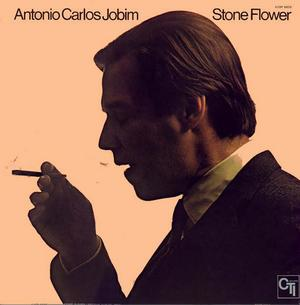
Late Nite Lounge Vol. 26 - Stone Flower, by António Carlos Jobim

There is something so soothing and relaxing about a top bossa-nova track. It's the world's most sensual genre, I think. It's perfect for those nights when you're exhausted and want to lounge around until eternity; it's perfect for when you're with someone whose company you enjoy, and you want time to stop still. Because when you play a bossa-nova track, time does stop still. All your brain has time to process is that beautiful face in front of you, the flow of the conversation, and that wondrous sound coming from your stereo that only a genius could have composed.

António Carlos Jobim is that genius. He is perhaps the man that most popularized the genre, along with other greats such as Vinicius de Moraes and João Gilberto. Bossa nova can be described as the love child between cool jazz and samba, and Tom Jobim understands that connection better than most. Immortal songs of his, like the popular bossa 'Brazil' (covered by countless artists) is a seamless fusion of both genres. The bossa tracks below, Tereza My Love and Andorinha, are from Stone Flower, one of António Jobim's greatest albums. I've been listening to it a lot recently; try doing so while driving through Luanda's deserted roads late on a Sunday night.

Tereza My Love
Andorinha

Há algo mágico e relaxante numa boa bossa nova. Creio que é o estilo de música mais sensual que existe. É perfeita para aquelas noites em que estás exausto e só queres descontraír a noite inteira; também é perfeita para aqueles momentos em que estás com alguém cuja companhia disfrutas, e queres que o tempo pare. Porque quando se ouve uma bossa nova de jeito, o tempo realmente para. O cérebro só tem espaço para contemplar a face linda a tua frente, o desenrolar da conversa, e aquela música dos deuses que sai da aparelhagem, música que só um génio podia ter composto.

O António Carlos Jobim é um destes tais génios. É um dos homens que mais popularizou a bossa nova, com outros grandes da música brasileira tais como o Vinicius de Moraes e o João Gilberto. A bossa nova pode ser descrita como a fliha prodígia da relação amorosa entre o cool jazz e o samba, e o Tom Jobim percebe sente esta conecção melhor que muitos. Músicas suas, como a imortal 'Brasil' que já foi cantada por muitos outros artistas, é uma fusão clara entre os dois estilos musicais. As bossas acima, Tereza my Love e Andorinha, são do disco Stone Flower, um dos melhores do Tom Jobim. Tem rodado o meu iPod nos últimos dias; tenta ouvi-lo enquanto conduzes pelas ruas desertas de Luanda no domingo à noite, de madrugada.

Monday, February 8, 2010

Late Nite Lounge Vol. 12: Luca, Leila, and Bebel

Bebel GilbertoSunday night arrives, confused as always. It’s not sure what it is – it’s a weekend night, but only in name. It’s not a particularly liked night. Sunday night makes people remember about next week’s to-do lists, it drives students to their homework desks, frantically trying to make up for the weekend’s proclivities, and it makes you curse silently about the injustice of it all.

Sunday night though is also a time for dreaming, for quiet reflection, for some downtime. And that’s where I can help you out. There might be few things better in life than listening to Bebel Gilberto’s Samba da Benção in a darkly lit room…it’s an experience in and of itself. Her smoky voice, almost breathless, quietly intimate even though she’s crooning evocatively into the microphone. The soft rhythms of the instruments, an orchestra for one.

Or try Luca Mundaca’s Cidade. The beat is slightly quicker, but the feel is still downtempo. The piano and the guitar complement each other and the soft, unobtrusive, jazz-style percussion allows Luca’s voice to shine through. But maybe you’re in the mood for a classic bossa, and Leila Pinheiro’s lovely Pra Iluminar is just that. The vocal range she displays in this song is remarkable and hearing a distinctive voice is a refreshing end to the week. Maybe Sunday night isn’t so bad after all…

Samba da Benção
Cidades
Pra Iluminar

Chegou a noite de domingo, confusa como sempre. Ela não sabe bem o que é; tem crise de identidade. É noite de fim de semana, mas não se comporta como tal. Não ha muita gente que goste dela. É uma noite de stress para muitos, porque faz-nos lembrar de tudo que temos de fazer na próxima semana, faz com que estudantes voltem às suas escribanias para fazerem o trabalho que não fizeram no sábado, faz com que resmungamos resignados de que as coisas boas na vida duram pouco.

Mas domingo à noite é também tempo para sonharmos, para reflectirmos, para chillarmos. E é aí onde posso vos ajudar. Creio que ha poucas coisas na vida como ouvir Samba da Benção de Bebel Gilberto num quarto minimamente iluminado...é uma experiência em si. A sua voz é ofegante, tenra, intima, sussurando para o microfone um poema lindo sobre o samba. Os instrumentos são suaves, uma orquestra só para ti.

E que tal Cidades, de Luca Mundaca? O beat é sensivelmente mais acelerado, mas continua a ser uma vibe downtempo. O piano e a guitarra brincam entre si, e a percurssão é suave, relaxada, faz lembrar o jazz. Mas se calhar estás com uma vontade de bossa nova, dos puros. Pra Iluminar de Leila Pinheiro cumpre este papel. Tem uma voz cativante e bastante apurada, refrescando a última noite do fim de samana. Talvez domingo à noite não seja tão má assim...


-Photo: Bebel Gilberto at the Ottawa Jazz Festival

Thursday, January 28, 2010

Luca Mundaca

Day by Day Luca Mundaca
You step into your home and its cozy inside, it seems like you’re worlds away from the inhuman freeze outside. You take off your bag and with it all the day's problems, and as you slip off your parka the warmth slowly takes hold of you as it wins the battle against the frigid cold. You pour yourself something to drink – the commute home took its toll. The music lover that you are, you immeadiately head to your stereo and put in Luca Mundaca, more specifically her song Day by Day. A friend told you about it, you remember.

The striking combination of swaying Brazilian acoustic guitar strings, softly strummed, and that violin that caresses you right at the beginning of the song, is divine. It warms you up more than any fire ever could. You feel at peace. The crystalline voice that sings to you, sweetly and lovingly, takes over the room – you hear nothing else. You don’t want it to stop. Your mind wanders to warm sands and a suave sea breeze with hints of salt, but it’s just the subtle bossa rhythms playing tricks on you. Day, by day by day by day by day, eu quero mais te ver. You might not know what that means but you don’t care. The song finishes and you don’t even notice – that voice still goes on in your head. It haunts you long after it croons out the final note.

Simple music is beautiful music.

Luca Mundaca has been making beautiful music since she first started picking her guitar strings in Brazil at the age of 15. She finally found the life and following she deserved when she moved to New York City and awed its residents with her heartfelt interpretation of bossa nova, and her music found its ways into Brazilian compilation CDs that meant something. Among them was Putumayo’s Brazilian Lounge CD, the greatest CD I have ever bought and an inspiration for this site. It is there that I first heard Há Dias (There Are Days). And since the best things in life come in threes, the jazzy, bluesy Não Se Apavore completes the trio of striking melodies created by Miss Luca Mundaca.

Day by Day
Ha Dias (There Are Days)
Não Se Apavore

Chegas a casa depois de mais um dia irreal. O tránsito está cada vez pior, os motoristas cada vez mais loucos. Entras pela porta e tiras a pasta, e com elas os problemas do dia. Estás em casa. Que bom. Fechas a porta e a poeira fica lá fora, e o calor ofegante também. Ar condicionado, grande invenção. Diriges-te a cozinha e fazes uma bebida, porque a boca esta seca demais. Parece que o caminho de regresso a casa é sempre mais longo. És um amante da música e por isso vais logo ter com a tua velha amiga, a sábia, a tua aparelhagem. Lembras-te que um amigo teu (ou será que viste na net?) falou te de uma música, Day by Day devia ser o título, cantada por uma tal Luca Mundaca.

A música começa e tu paras, imóbil. So funcionam duas coisas. Os teus ouvidos, a ouvir a linda melodia, a guitarra acústica suave e relaxante, aquele violino que te faz caricias, devagar, com ternura. E o teu coração, que ama esta música intensamente, toda ela. Não queres que ela acabe mas percebes que a emoção forte que sentes a ouvir uma música como esta é mesmo só para durar uns poucos minutos, senão perderia a graça. E a voz...essa voz. É linda, cristalina, perfeita para acompanhar uma melodia destas. Invade o quarto e toma conta de ti, por completo. És levado a uma praia escura, iluminada só pela lua cheia, e a briza do mar e o vai-vem das suas ondas são os únicos sinais de vida. Ah, mas não, continuas em casa...são só os poderes da bossa nova. Day, by day by day by day day, eu quero mais te ever. Nem sabes bem o significado disto, mas não queres saber. A música acaba e nem dás por isso – na tua mente, a música continua. No teu coração ela ainda toca. E continua tocando muito depois do último sussurro.

Ainda existe música boa.

A Luca Mundaca faz música assim desde que descobriu que tinha dom para a guitarra, lá pelos seus 15 anos de idade. Arriscou na vida, vendeu tudo e mudou-se para a Nova Iorque, onde encantou os novaiorquinos com os pedaços de Brazil que ela trazia na alma e espalhava com a sua guitarra. Era bossa nova como nos velhos tempos. Não tardou para que as suas músicas aparececem nas grandes compilações de música brasileira, tal como na compilação Putumayo Brazilian Lounge, talvez o melhor CD que alguma vez comprei e uma fonte de inspiração ímpar para este blogue. Foi lá onde ouvi pela primeira vez Há Dias, de Luca Mundaca. E como não há duas coisas boas na vida sem a terceira, incluo aqui três músicas, sendo a última a Não Se Apavore, com uma personalidade bastante jazzy, porque a Luca não vive só do bossa nova...


-Music featured on Luca’s debut CD, Day by Day/Musica do seu primeiro album, Day by Day

-Photo: Cover art of Luca's Day by Day album

Luca Mundaca online
Luca Mundaca on Myspace
Available on iTunes and Amazon
Related Posts Plugin for WordPress, Blogger...